quality craft
Does AI Kill Craft? Taste, Judgment, and Quality in the Age of Generated Code
The fear is that AI turns engineering into slot-machine coding and craftsmanship dies. The opposite is true: when generating code is free, the scarce thing is the craft AI doesn't have — taste, judgment, the standard to tell good from plausible. AI is a power tool, and power tools didn't kill woodworking. The real risk isn't that AI kills craft — it's letting it kill the path to craft by removing the struggle that builds judgment.

The fear is that AI turns engineering into slot-machine coding — accept, accept, accept — and craftsmanship dies. I think the opposite is true: when generating code becomes free, the scarce and valuable thing is exactly the craft AI doesn't have — taste, judgment, and the standard to tell genuinely good from merely plausible. AI is a power tool, and power tools didn't kill woodworking; they raised the floor and moved the craft up a level. The real risk isn't that AI kills craft — it's that we let it kill the *path to* craft by removing the struggle that builds judgment. This is how to use AI to deepen craft instead of erasing it.
A senior engineer I respect said something that stuck with me: "I'm worried AI is going to produce a generation of developers who can ship anything and understand nothing." It's a real fear, and I've seen its early shape — engineers accepting AI output they can't explain, code that works until it doesn't, a creeping sense that nobody's really holding the quality anymore. If craft is care and understanding, and AI lets you ship without either, doesn't AI kill craft?
I've come to the opposite conclusion, and I'll argue it here. AI doesn't kill craft. It does something more interesting: it makes the typing free and the taste precious. When anyone can generate a plausible implementation in seconds, the thing that separates a craftsman from a code-forwarder isn't the ability to produce — it's the judgment to know what's worth producing, the taste to tell good from plausible, and the standard to refuse output that won't last. Those were always the heart of craft. AI just stripped away the manual labor that used to hide them.
The danger is real, but it's not the one people name. The danger isn't that AI replaces craft. It's that we let it remove the struggle that builds craft — and end up with engineers who never developed the judgment because the machine always did the hard part. That's avoidable, and avoiding it is a choice. Here's the case.
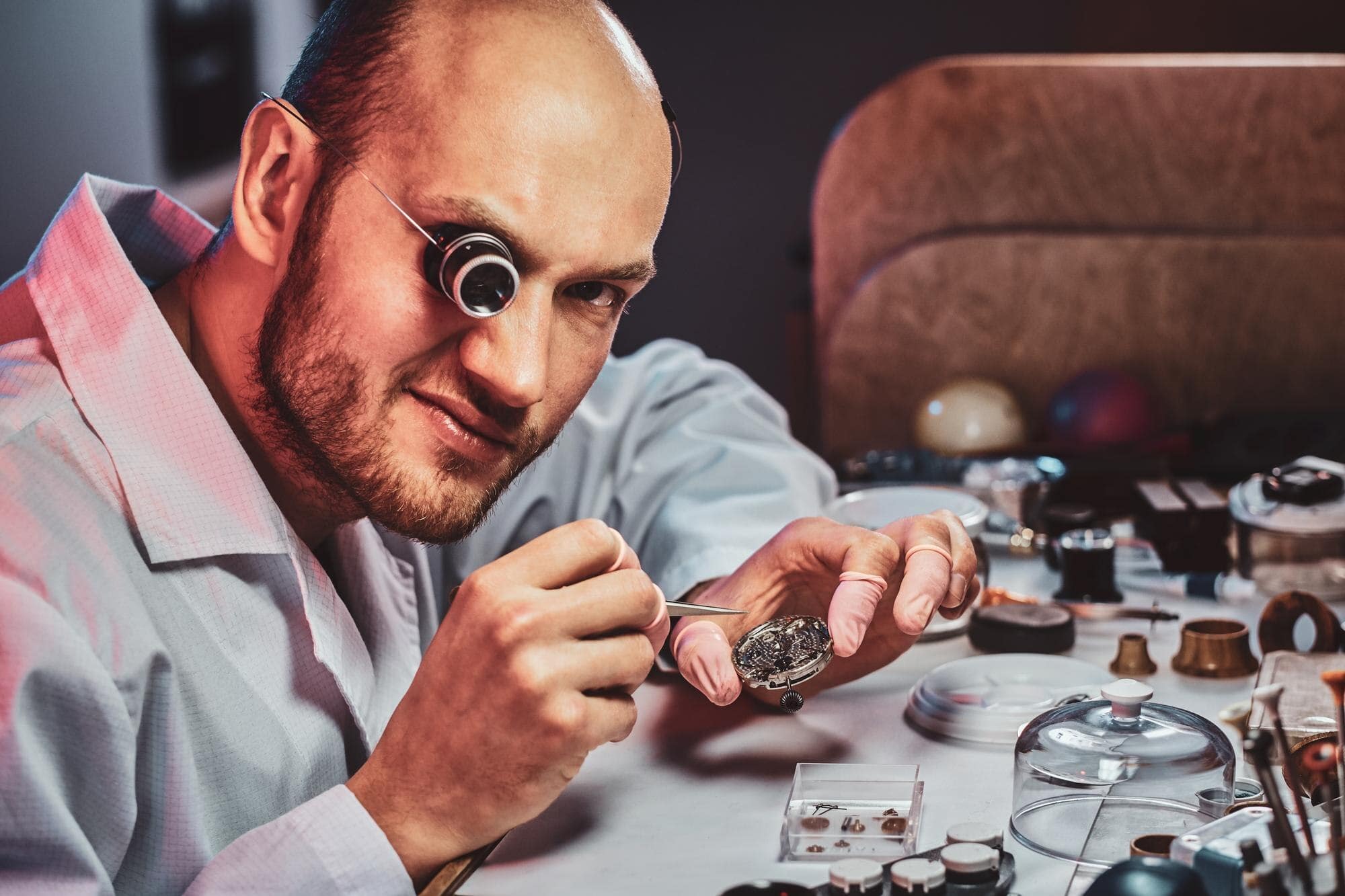
Power tools didn't kill woodworking
Every craft has been through this. The lathe, the table saw, the CNC machine — each arrived with the same prophecy that "real" woodworking was finished, that machines would flatten craft into mass-produced sameness.
What actually happened: power tools raised the floor and moved the craft up a level. They eliminated the brute labor (cutting boards to rough size by hand for an hour) and freed the craftsman to spend their judgment where it mattered — the joinery, the proportions, the finish, the design. A master woodworker today uses power tools constantly. The craft didn't die; it relocated to the decisions the tools can't make.
AI is the power tool for software. It eliminates the brute labor — boilerplate, the tenth CRUD endpoint, the function you've written a hundred times — and frees you to spend judgment on what matters: the architecture, the edge cases, the question of whether this is the right thing to build at all. The craft doesn't die. It moves to where the tool can't go. This is the same realization behind how senior engineers leverage AI: the leverage is in directing and judging, not typing.
What AI can't do is exactly what craft is
Strip software craft down to its core and you find a set of capabilities AI conspicuously lacks:
- Taste — the sense of whether a solution is good, not just functional. AI produces the statistically plausible; it has no taste, only patterns. Knowing that a clever one-liner will haunt the next maintainer, or that this abstraction is elegant and that one is over-engineered, is taste — and it's yours.
- Judgment about what's worth building. AI will happily build the wrong thing beautifully. Deciding what not to build, what trade-off to accept, what the actual problem is — that's craft, and AI has no opinion.
- Recognizing subtle wrongness. AI states wrong things in the exact confident tone it states right things. The craftsman's suspicion — "this looks right, which is exactly why I don't trust it yet" — is the skill that catches what the model can't flag.
- Conceptual integrity. AI generates locally-plausible code that's globally incoherent — five functions that each work and together form a mess. Holding the whole in your head so the parts cohere is craft.
Notice that these were always what separated great engineers from adequate ones. AI didn't change what craft is — it removed the production work that used to camouflage the fact that taste and judgment were the real differentiators all along.
The real danger: AI can kill the path to craft
Here's where the fear is legitimate, and it's worth taking seriously. Craft is learned — through struggle, through making mistakes on real systems and feeling the consequences, through the slow accumulation of judgment that comes from doing the hard part yourself. If AI always does the hard part, where does the next generation's judgment come from?
This is a genuine risk. An engineer who only ever accepts AI output never builds the taste to evaluate it. They become a forwarder of plausible code, not a craftsman — and they can't tell the difference, which is the worst part. The struggle AI removes is, partly, the struggle that builds the craftsman.
But the answer isn't to reject the tool — it's to deliberately preserve the learning. The distinction is everything:
- AI as a crutch: accept output you can't explain, never wrestle with the problem, skip the struggle, build no judgment. Craft atrophies.
- AI as a tutor and tool: use it to go faster on what you understand, interrogate what you don't, demand explanations, verify everything, and spend the time you saved on harder problems. Craft accelerates — you can learn faster than my generation did, because you have a tireless explainer on tap.
The tool is neutral. Whether it kills your craft or compounds it depends entirely on whether you keep doing the hard thinking or outsource it. (This is the personal version of the team-level apprenticeship problem — judgment has to be deliberately built now, not absorbed by accident.)
How to use AI to deepen craft, not erase it
Concretely, the practices that keep AI on the craft-compounding side:
- Never ship code you can't explain. If you can't defend why it's correct, you haven't done the craft — you've forwarded a guess. This one rule prevents most of the atrophy.
- Use AI to interrogate, not just generate. "Why is this the right approach? What are the failure modes? What would break this?" Turn it into a sparring partner for judgment, not a vending machine for code.
- Spend the saved time going deeper, not just shipping more. The point of removing boilerplate is to invest that time in the hard problems — architecture, edge cases, the design question — not to ship twice as much mediocre work.
- Keep your hands in the hard parts. Deliberately do some of the difficult thinking yourself, especially while learning. The struggle is the gym; don't skip every workout because there's a forklift.
- Hold the same standard you always did. AI output gets reviewed against the same bar as human output — maintainability, clarity, does-this-age-well. Generated isn't an excuse for a lower standard.
None of this is about rejecting the tool. Look at the last thing you built with AI and try to explain, out loud, why each non-trivial part is correct. If you can, you're using it the way a craftsman uses a power tool. If you can't, you've just found the exact place where the machine is doing your thinking — so go back and do that thinking, this time. Craft was never about typing the code. It was always about the judgment behind it. AI didn't take that from you. It just made it the only thing that matters.

Ruchit Suthar
15+ years scaling teams from startup to enterprise. 1,000+ technical interviews, 25+ engineers led. Real patterns, zero theory.